
Daily Challenges and Streaks in Body Positive Nutrition Apps
Snacko is the food tracking app that makes healthy eating effortless. Join thousands building better eating habits every day.

I've watched too many friends get sucked into those daily streak notifications from nutrition apps, only to spiral into shame when they miss a day. The problem isn't the streaks themselves—it's how most apps treat a missed check-in like a moral failing instead of, you know, life happening. Body positive nutrition apps are trying to fix this, but their approach to gamification reveals some fascinating technical challenges around motivation vs. guilt.

Why Traditional Food Tracking Triggers Obsessive Behaviors (And How Streaks Can Too)
I've watched traditional calorie counting apps turn normal eating into a math problem. When you're logging every bite and seeing those red numbers flash "over budget," food becomes the enemy. I've seen people skip social dinners because they couldn't accurately log restaurant meals, or eat the same boring rotation because they knew the exact macros.
The real kicker? Streak features can trigger the same obsessive patterns. That "30-day logging streak" badge becomes more important than actually listening to your body. I know people who've logged fictional meals just to keep streaks alive, or felt genuine panic about breaking a 47-day streak because they forgot to open the app.
Benchmark: Healthy engagement means you can skip logging without anxiety, eat untracked meals regularly, and prioritize social experiences over perfect data. If missing a day feels catastrophic, that's your warning sign.

Building Flexible Challenge Systems That Don't Punish Your Worst Days
I've learned the hard way that rigid daily challenges are basically designed to make you feel like garbage. Missing one day because you're sick or overwhelmed shouldn't torpedo your entire progress.
What actually works is building in flexibility from the start. I now look for apps that let me pause streaks during rough patches or offer alternative challenges when my original plan isn't realistic. Like swapping "cook a full meal" for "drink an extra glass of water" on days when I can barely function.
The best systems I've used track overall patterns rather than perfect daily compliance. They celebrate getting back on track instead of punishing the stumble. Your worst mental health day shouldn't also become your worst app-guilt day.
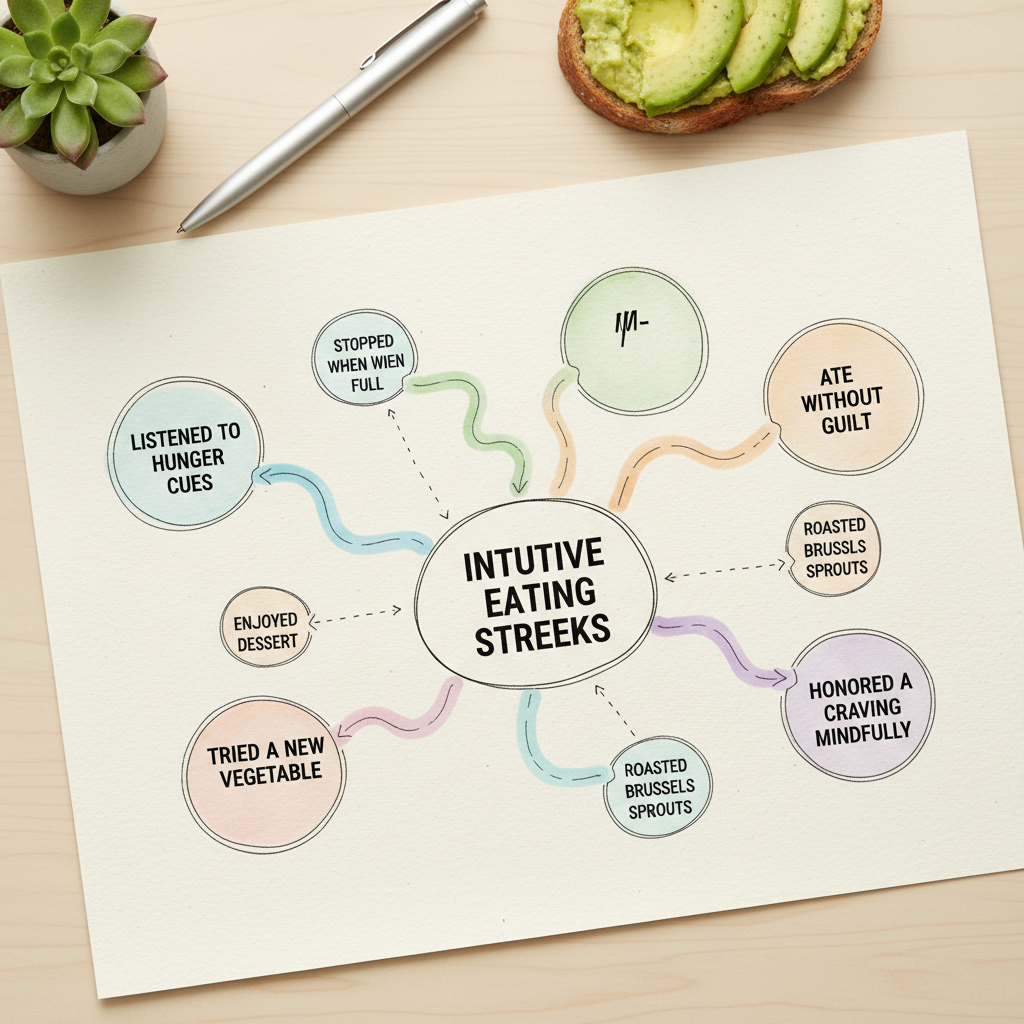
Designing Personal Streak Categories Beyond 'Perfect Eating'
I've learned that the most sustainable streaks aren't about perfection—they're about tiny, meaningful actions that build trust with yourself. Instead of tracking "ate perfectly," try "noticed my hunger cues" or "ate without my phone for one meal."
My favorite categories focus on process over outcome: "took three breaths before eating," "packed a snack I actually wanted," or "ate something green because it sounded good." These feel achievable even on chaotic days.
The key is making them so small you'd feel silly not doing them, but specific enough that you know exactly when you've succeeded.

When to Reset, Pause, or Completely Abandon Your Nutrition Streaks
I've learned the hard way that sometimes the healthiest thing you can do is break your streak. Here's when I hit the pause button:
Reset when life gets messy. Food poisoning, death in the family, job loss - these aren't failures, they're human experiences. I give myself a clean slate rather than wrestling with guilt.
Pause during major transitions. Moving, new job, relationship changes. I've found it's better to maintain one thing well than juggle everything poorly.
Abandon completely if the streak becomes toxic. If you're logging lettuce leaves or panicking over missing a day, the app isn't serving you anymore. I've deleted apps mid-streak when they started controlling my thoughts more than helping my health.
Your mental peace trumps any digital badge.
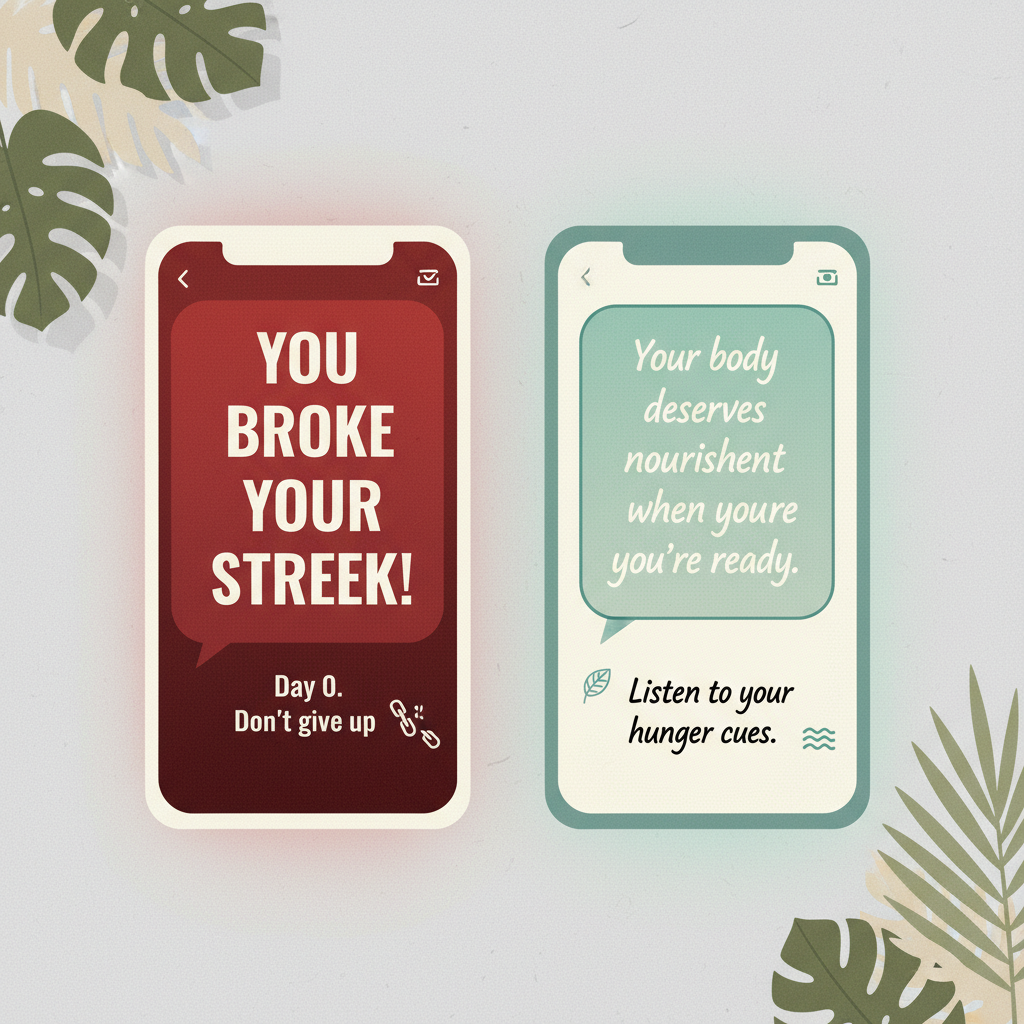
Converting Shame-Based Notifications Into Gentle Accountability Nudges
How can I tell if my app's notifications are shame-based?
If you're getting messages like "You missed yesterday! Don't break your streak!" or "Your friends are ahead of you," that's shame territory. I've noticed the worst ones use guilt ("You haven't logged meals in 3 days") or create artificial urgency around streaks. The language feels pushy and makes you feel bad about yourself.
What should gentle accountability look like instead?
I prefer notifications that sound like a supportive friend: "Ready for today's mindful eating check-in?" or "How did yesterday's intuitive eating experiment go?" The best ones I've seen offer choices rather than demands - "Would you like to reflect on your hunger cues today?" versus "Log your hunger levels NOW!" It's about invitation, not obligation.
What People Ask
How long do daily challenges typically take in body positive nutrition apps?
From what I've seen, most daily challenges take about 5-10 minutes max - they're usually simple things like "take a photo of your colorful meal" or "write down one thing you're grateful for about your body." I actually prefer this because anything longer feels like homework and I'd probably skip it.
Do body positive nutrition apps with streaks and challenges cost more than basic tracking apps?
Yeah, they definitely tend to be pricier - I've noticed the good ones with meaningful challenges usually run $8-15/month versus the basic calorie counters that might be free or $3-5/month. Honestly though, I think it's worth it because the focus on habits over restriction has been way more sustainable for me than the cheaper apps that just made me obsess over numbers.
The Streak That Actually Matters
Here's what I'd do differently: track your "grace days" instead of perfect streaks. My take? The real victory isn't hitting 100 days straight—it's bouncing back after day 101 when life happens. That resilience streak is worth way more than any app badge.


